
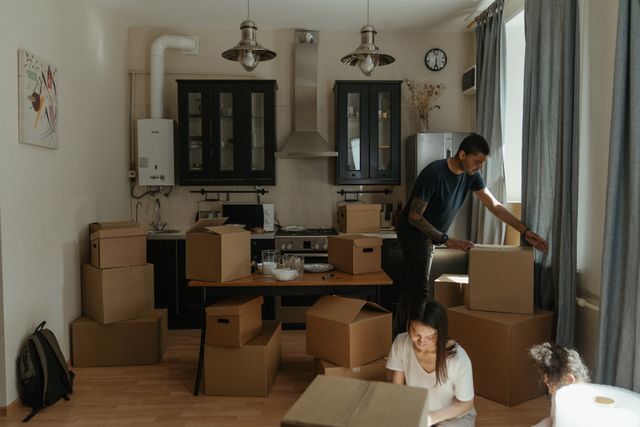
Ask anyone who has moved a few times which room took the longest, and most will say the kitchen. It holds more individual items than any other room in the house, and almost all of them are fragile, sharp, heavy, awkwardly shaped, or likely to leak. Add an Edmonton winter, when a jar of pickles can freeze solid in a truck overnight, and the job needs more planning than people expect.
The good news is that a kitchen packs well when you follow a sequence. Here is how to do it without broken plates, crushed boxes, or a frantic search for the coffee maker on your first morning in the new place.
Start by Shrinking What You Have to Move
The easiest item to pack is the one you never put in a box. About two weeks before your move, start cooking from the freezer and pantry instead of shopping. Plan meals around the half-bag of rice, the frozen perogies, and the three open boxes of pasta.
Unopened, non-perishable food you won’t use can go to Edmonton’s Food Bank, which accepts donations at drop-off points across the city. Expired spices, stale crackers, and that mystery sauce from 2023 can go straight in the bin.
Then deal with the items most moving companies won’t carry. Propane cylinders, aerosol cans, oven cleaners, lighter fluid, and similar products are flammable or corrosive. Use them up, give them to a neighbor, or take them to a City of Edmonton Eco Station for proper disposal.
Get the Right Supplies Before You Wrap Anything
Grocery store boxes seem like a bargain until the bottom gives out under a stack of dinner plates. For a kitchen, you want:
- Small and medium boxes for heavy items, since a large box full of dishes quickly becomes too heavy to lift safely
- Dish pack boxes with cardboard cell dividers for glasses and stemware
- Plenty of unprinted packing paper, because newspaper ink rubs off on dishes
- Bubble wrap for wine glasses, vases, and anything with a delicate rim
- Strong packing tape, a thick marker, and a few zip-top bags for small parts
Before you buy anything, check what your mover provides. Some movers in Edmonton include boxes and protective materials in the quote, which can save you a separate trip and a surprising amount of money.
Pack in the Reverse Order of Use
Start with the things you rarely touch. A week out, box up the roasting pan, the slow cooker you use once a winter, holiday platters, cookbooks, and the bread maker hiding in the back cupboard. A few days later, move on to most of your dishes, leaving just enough for each person in the household. Everyday essentials go last.
This approach keeps your kitchen usable for as long as possible and stops you from ordering takeout for a full week before the move.
How to Wrap Dishes, Glasses, and Stemware
Begin each box with a cushioned base of crumpled paper, about two or three inches deep.
- Plates should stand on their edges, like records in a crate, rather than lie flat. They handle pressure far better that way. Wrap each one individually, or wrap them in bundles of three or four with a sheet of paper between each plate.
- Bowls can nest inside one another with paper between them, then get wrapped together as a bundle.
- Glasses need paper stuffed inside before you roll them diagonally in a sheet, tucking the ends into the opening. Place them rim-up in the dish pack cells.
- Stemware is the most delicate thing in your kitchen. Wrap the stem on its own first, since that’s where most breaks happen, and then wrap the whole glass.
Heavier items go at the bottom and lighter ones on top. Fill every gap with crumpled paper, close the box, and give it a gentle shake. If you hear anything shift or clink, open it and add more padding. Keep each box under about 18 kg (40 lb), and write “FRAGILE” and “THIS SIDE UP” on at least two sides, not only the top.
Knives, Pots, and Small Appliances
Knives deserve their own method. Wrap each blade in a few layers of paper or a dish towel, secure it with tape or a rubber band, and pack the bundle with the points facing the same direction. Write “SHARP” on the box so nobody reaches in blindly.
Pots and pans can nest together with paper between them, while lids are best wrapped separately and slid down the sides of the box. Cast iron is nearly indestructible but very heavy, so pair it with lighter items rather than filling a box with it.
For small appliances, the original box is ideal if you still have it. Otherwise, remove anything detachable (blender jars, glass carafes, the inner pot of a pressure cooker) and wrap those parts on their own. Coil cords and tape them to the appliance body, then put loose screws or blades in a labeled zip-top bag.
Edmonton Weather Changes the Rules
Moving in the Edmonton area between October and April brings problems that people in milder cities rarely think about.
Liquids freeze and expand. Olive oil, vinegar, sauces, soft drinks, and wine can crack their bottles or push off their lids if they spend a night in an unheated truck, garage, or storage space at −25°C. Carry them in your heated car instead, sealed in a bin or a lined box in case anything leaks.
Glass and ceramic also become more brittle in deep cold. When boxes come in from outside, let them warm up for an hour or two before unpacking, and avoid running hot water over cold glassware straight away. If your schedule is tight in the winter months, ask your movers in Edmonton about heated storage so your kitchen goods aren’t sitting in a frozen space between possession dates.
Your fridge and freezer need attention too. Empty them, unplug them a day or two before the move, let them defrost completely, and dry the inside thoroughly. A damp fridge closed up for even a short trip can smell of mildew when you open it.
Summer moves bring the opposite issue. Perishable food spoils quickly in a hot vehicle, which is one more reason to eat down your supplies early.
Pack a First-Night Kitchen Box
This box rides with you, not on the truck. Include a kettle or coffee maker, mugs, one plate, bowl, and set of cutlery per person, a small pot, a frying pan, a spatula, a can opener, dish soap, a cloth, paper towels, garbage bags, and some easy snacks. After a long day of moving, being able to make tea and a simple meal without digging through 30 boxes makes the evening much more bearable.
Label So Anyone Can Unpack It
Write the room, the contents, and a priority level on each box, for example: “Kitchen – everyday dishes – unpack first.” Numbering boxes and keeping a short list on your phone makes it easy to confirm that everything arrived. Clear labels also help the crew place boxes on the kitchen counter or floor instead of stacking them in the hallway.
Get Help From Experienced Edmonton Movers
Since 1988, we’ve helped Edmonton families relocate everything from a basement suite kitchenette to a full chef’s kitchen. Our crews are full-time employees trained to handle fragile items, and boxes, wardrobe boxes, mattress covers, and protective materials come included with every job at no added cost.
If your possession dates don’t line up, our heated storage facility on 54th Street keeps your dishes, glassware, and pantry goods out of the cold until your new home is ready.
If you’re looking movers in Edmonton for your next move, call us at 780-474-2861 or request a free estimate. We’ll put a written, not-to-exceed quote in your hands before move day.

